🌋 The World’s Most Unique Lava
What sets this mountain apart is the chemistry of what it produces. Most lava leaves a volcano hotter than 1,100 °C and moves with the thick sluggishness of molten glass. Lengai’s natrocarbonatite emerges between roughly 500 °C and 600 °C. Because it is rich in sodium and potassium carbonates and contains almost no silica, it is extraordinarily fluid—sometimes described by observers as moving almost like water or thin oil. Fresh flows look black or dark brown under daylight. Within hours of contact with humid air, the surface reacts, absorbing moisture and carbon dioxide, and turns a brilliant, chalky white. The result is a landscape that can appear dusted with snow even under the tropical sun.
Trekking Ol Doinyo Lengai & Lake Natron
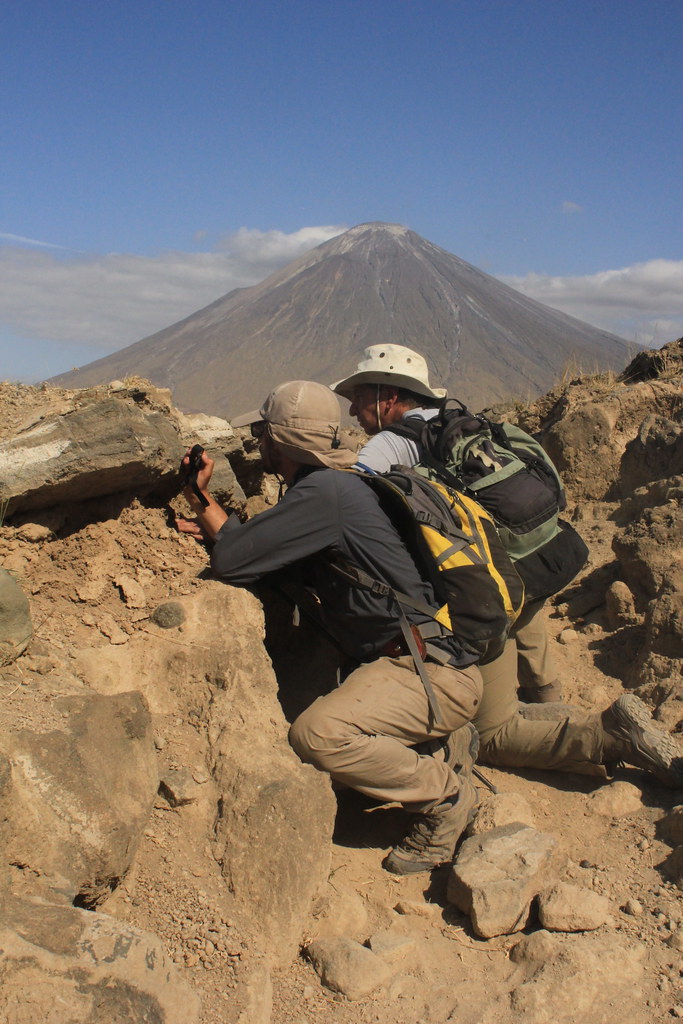
Climbing the Ol Doinyo Lengai is no casual day hike. The slopes are steep and composed of loose, unstable ash and carbonate rubble that shifts underfoot. Daytime temperatures on the lower approaches commonly exceed 40 °C, so guided groups usually leave in the middle of the night, aiming to stand on the northern crater rim at first light. Anyone attempting the ascent relies on experienced local guides who know how to read gas emissions, unstable ground, and sudden changes in the crater. The standard route starts from the village of Engare Sero and involves a steep, loose, overnight ascent to reach the crater rim at dawn. There is no permanent snow, yet the surface is often coated with unstable white carbonate ash that can collapse underfoot. Gas vents and sudden lava extrusions add further hazard. Local Maasai guides are essential; their knowledge of safe routes and changing conditions is the difference between a memorable trek and a dangerous one.
Ol Doinyo Lengai + Wildlife Safari
Combining a climb up Ol Doinyo Lengai with a northern Tanzania wildlife safari takes you to the remote Rift Valley. You get to scale the world’s only active carbonatite volcano and view massive herds in parks like Serengeti National Park and the Ngorongoro Crater.
Or
What Our Climbers Say
Discover experiences and reviews from our adventurous guests.


Active Stratovolcano
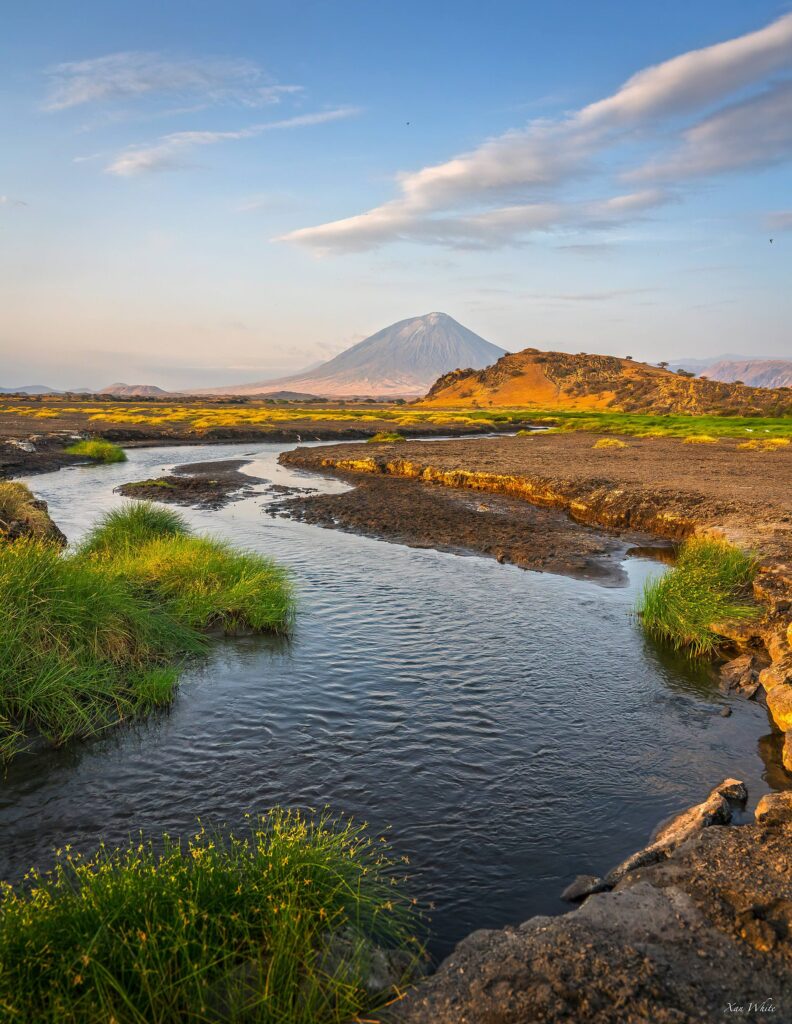
The crater itself remains active. After the powerful explosive eruptions of 2007–2008 that reshaped the summit, quieter but persistent activity has continued. Satellite data, ground observations, and local reports show ongoing lava overflows, thermal anomalies, and occasional red-glowing extrusions well into 2025 and 2026. Eruptive style is equally distinctive. Instead of the high, glowing fountains typical of basaltic volcanoes, Lengai produces low, quiet outpourings of lava that form small hornitos (spatter cones) and thin, fast-moving flows. Explosive ash eruptions occur as well, the most recent significant ones taking place in 2007–2008 and again in 2017. After each ash event the mountain rebuilds its white-capped summit by slowly extruding new natrocarbonatite. Geologically, Lengai is the southernmost active volcano in the Gregory Rift, a segment of the East African Rift System. Its magma is believed to originate from a deep, carbon-rich source that has been fractionated and filtered through the thick continental crust. The same chemical processes that produce the unusual lava also create the highly alkaline waters of nearby Lake Natron, one of the most extreme environments on the planet and a critical breeding ground for lesser flamingos.
The Maasai’s Sacred Mountain of God
The Maasai call Ol Doinyo Lengai “the Mountain of God” because it is regarded as the sacred dwelling place of their supreme deity, Engai (also spelled Enkai or Ngai)
What makes Lengai unique is the chemistry of its lava. Natrocarbonatite emerges at temperatures of only 500–600 °C—cool enough that it can sometimes be approached on foot during quiet periods. Fresh flows are black and fluid, almost watery in consistency. Within hours of exposure to moist air the lava absorbs water and carbon dioxide, turning chalky white. Over days the white crust thickens, giving the upper slopes the appearance of a snow-covered mountain even under tropical sun. This rapid alteration is the reason climbers and scientists often describe the summit as a “black-and-white chessboard.”
Lake Natron 🦩
Or